
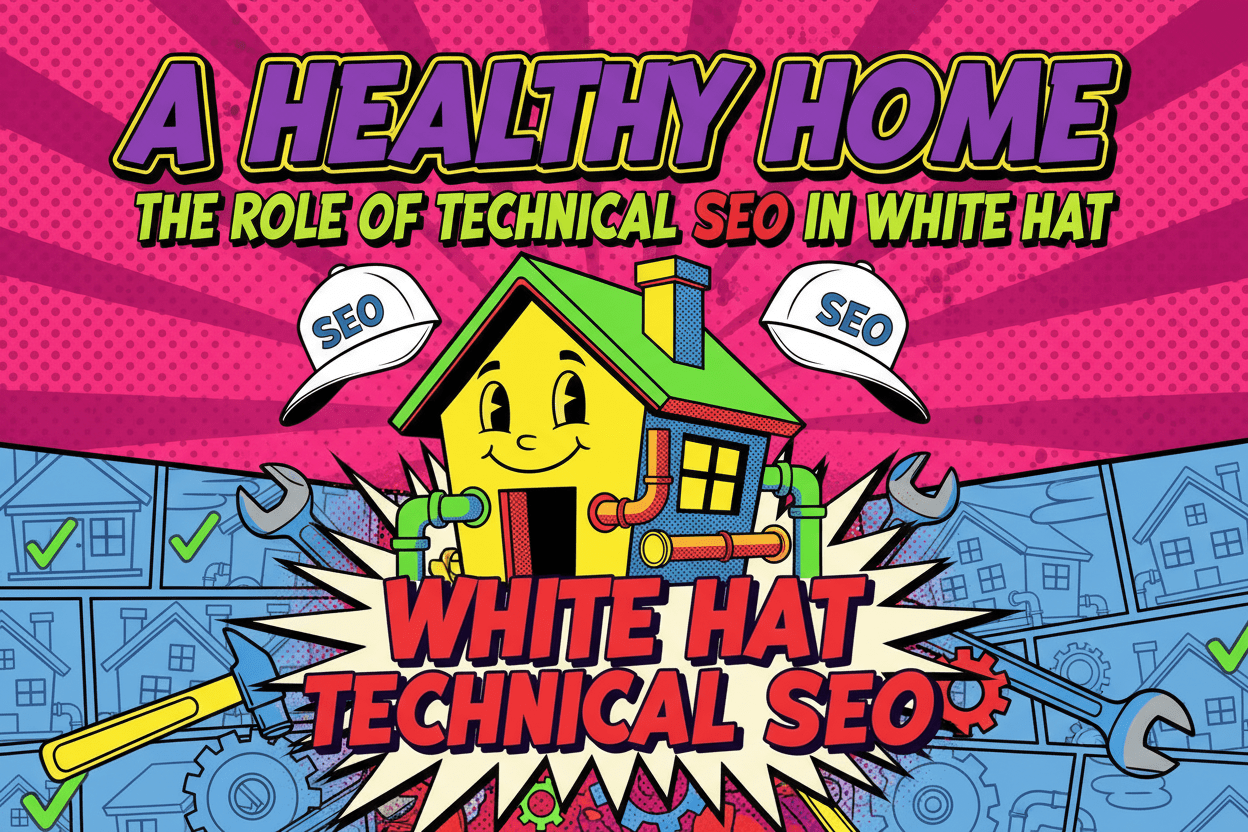
The Unseen Foundation: A Website’s Technical Integrity
Imagine building your dream home. You obsess over the interior design, the color of the walls, and the style of the furniture. But what if the foundation is cracked, the plumbing is leaky, and the electrical wiring is a tangled mess? No matter how beautiful it looks on the surface, the house is fundamentally unhealthy. It’s unstable, frustrating to live in, and ultimately, a risky investment.
Your website is your digital home. And its technical SEO, specifically its white hat technical SEO, is the foundation, plumbing, and wiring all rolled into one.
In the world of search engine optimization, it's easy to get fixated on keywords and content—the "interior design" of your site. But without a solid technical structure, even the most brilliant content can fail to reach its audience. This is where white hat technical SEO comes in. It’s not about finding sneaky loopholes or tricking search engines. This white hat technical SEO is the meticulous, ethical craft of building a website that is structurally sound, easy for search engines to navigate, and a pleasure for users to visit. It’s the very first step in building a digital asset that stands the test of time, aligning perfectly with The True North of SEO: A Comprehensive Guide to the White Hat Philosophy.
What is Technical SEO? The Blueprint of a Healthy Website
At its core, technical SEO refers to any optimization work done to a website and server that helps search engine spiders crawl and index your site more effectively. This is the central goal of white hat technical SEO. It’s the discipline of ensuring your site’s infrastructure meets the technical requirements of modern search engines.
The distinction between approaches is critical. As highlighted in a clear breakdown of what constitutes White Hat vs. Black Hat SEO, the goal isn't manipulation but facilitation. Black hat techniques might use technical tricks like cloaking (showing different content to Google than to users) to game the system for short-term gains. In contrast, white hat technical SEO is about transparency and efficiency. It’s about speaking Google’s language clearly so it can understand and trust your content.
Think of it this way:
- Crawlability: Can search engine bots easily discover and navigate all the important pages on your site? This is like ensuring every room in your house has a clear, unlocked door.
- Indexability: Can search engines properly analyze and add your pages to their massive database (the index)? This is making sure every room is on the official blueprint.
- Performance: Does your site load quickly and provide a smooth experience? This is the efficient plumbing and electrical system that makes the home livable.
- Architecture: Is your site logically structured? This is the intuitive layout of your home, where the kitchen logically connects to the dining room.
By focusing on these pillars, you’re not just appeasing algorithms; you're building a better, more reliable digital home for your human visitors.
The Blueprint for a Healthy Site: Core Pillars of White Hat Technical SEO
To build a structurally sound website, you need to focus on several key architectural elements. These are the non-negotiable pillars of white hat technical SEO that create a foundation for all other SEO efforts, from content creation to link building. Mastering these elements is fundamental to any successful white hat technical SEO strategy.
Crawlability and Indexability: Opening the Doors to Google
Before Google can rank your content, it first has to find it and understand it. This process begins with crawling and indexing. Your job, through white hat technical SEO, is to make this process as seamless as possible.
- XML Sitemaps: An XML sitemap is literally a map of your website that you hand directly to search engines. It lists all your important URLs, helping Google’s crawlers understand your site structure and discover new content faster. It’s like giving a home inspector a detailed blueprint to ensure they don’t miss any rooms.
- Robots.txt: This is a simple text file that tells search engine crawlers which pages or sections of your site they shouldn't access. In a white hat technical SEO context, this is used strategically to prevent crawlers from wasting time on low-value pages (like admin login pages or internal search results), allowing them to focus their limited "crawl budget" on the content you actually want to rank.
- Canonicalization: Websites often have multiple pages with very similar or identical content (e.g., a product page accessible via several different URLs). This can confuse search engines. The canonical tag (rel="canonical") is a snippet of code that tells Google which version is the "master copy" that should be indexed, consolidating your ranking signals and preventing duplicate content issues—a key task in white hat technical SEO.
Site Architecture and Structure: The Logical Flow of Your Home
A well-organized site, a core goal of white hat technical SEO, is easier for both users and search engines to navigate. A confusing structure leads to a poor user experience and can hinder search engine crawlers from finding your best content.
- Logical Hierarchy: Your site should have a clear, logical flow, starting from your homepage and branching out into categories and then individual pages or posts. This "silo" structure helps distribute authority (or "link equity") throughout your site and makes your content’s topical relevance clear.
- Clean URL Structure: URLs should be simple, readable, and descriptive. A user should be able to guess the content of a page just by looking at the URL.Poor URL: https://yourdomain.com/index.php?cat=5&id=821Good URL: https://yourdomain.com/services/technical-seo
- Internal Linking: This is one of the most powerful and underrated aspects of white hat technical SEO. Internal links are the hallways that connect the rooms of your website. Strategic internal linking helps search engines understand the relationship between your pages, establishes a hierarchy of importance, and guides users to relevant content, keeping them on your site longer. Every link is an opportunity to show Google what your most important pages are. This forms a crucial part of your ongoing white hat technical SEO maintenance.
Page Experience and Core Web Vitals: The Comfort and Usability of Your Space
Google wants to rank websites that people love to use. In 2021, the Page Experience update made this official, incorporating a set of key page experience metrics (often called Core Web Vitals) into its ranking algorithm. This focus on the user is the ultimate expression of white hat technical SEO and The Hospitality Principle: User Experience in White Hat SEO, proving that a positive user experience is a technical requirement.
The three main metrics are:
- Largest Contentful Paint (LCP): How long does it take for the main content of a page to load? This is the user's perception of loading speed. A fast LCP feels responsive.
- Interaction to Next Paint (INP): How quickly does your page respond when a user interacts with it (e.g., clicks a button or opens an accordion menu)? This measures interactivity. A low INP means the page feels snappy and not laggy.
- Cumulative Layout Shift (CLS): Does the page layout shift unexpectedly as it loads? This measures visual stability. A low CLS prevents users from accidentally clicking on the wrong thing because a button or link moved.
Beyond these specific metrics, page experience also includes:
- Mobile-Friendliness: Your site must be fully functional and easy to use on a mobile device.
- HTTPS: Your site must be secure. The "S" in HTTPS stands for secure, indicating that data transmitted between the user's browser and your server is encrypted. It's a fundamental trust signal.
Structured Data (Schema Markup): Labeling Everything for Clarity
If your website is a house, structured data is like putting clear, detailed labels on everything. It’s a standardized vocabulary of code (schema) that you add to your HTML to help search engines understand the context of your content more precisely.
For example, you can use schema to tell Google that:
- "4.5 stars" is an average rating.
- "Dr. Jane Doe" is the author of an article.
- "25 minutes" is the cooking time for a recipe.
- "$59.99" is the price of a product.
Implementing structured data can lead to "rich snippets" in search results—like star ratings, event dates, or recipe times appearing directly under your link. This not only improves visibility and click-through rates but also demonstrates a commitment to providing clear, helpful information, a core tenet of white hat technical SEO. Google's own documentation provides extensive resources on various technical SEO techniques and strategies, including the proper implementation of structured data. Using schema correctly is a hallmark of thorough white hat technical SEO.
Conducting a Technical SEO Health Check: Your Home Inspection Checklist
Just like a home needs a regular inspection, your website requires periodic audits, a key practice in white hat technical SEO, to identify and fix issues before they become major problems. A comprehensive audit can be complex, but you can start with a basic health check using freely available tools. For those wanting a deeper dive, resources like Semrush's guide on how to perform a technical SEO audit offer a fantastic step-by-step process.
The Essential Toolkit
- Google's Webmaster Tools (often called Search Console or GSC): This is your direct line of communication with Google. It's non-negotiable. These tools provide invaluable reports on indexing status, mobile usability, page experience signals, and any crawl errors Google encounters. It's the first place you should look for signs of technical trouble.
- PageSpeed Insights: This tool analyzes your page's performance on both mobile and desktop devices and provides actionable recommendations for improvement. It directly measures your page experience metrics.
- A Site Crawler: Tools like Screaming Frog (free for up to 500 URLs) or the site audit features in platforms like Ahrefs and Semrush act as your personal crawlers. They will scan your website just like Google does and generate reports on issues like broken links, redirect chains, duplicate titles, and missing meta descriptions.
A Practical Mini-Audit Framework
Here’s a simplified checklist you can use to conduct a basic "home inspection" of your site:
| Inspection Area | What to Check | Tools to Use | Potential Issues Found |
| 1. Indexability | Use the site:[suspicious link removed] search operator on Google. Does the number of results seem correct? | Google Search | Too many/too few pages indexed, wrong pages showing up. |
| 2. Crawl Health | In your search console, check the "Coverage" report. Look for "Errors," "Excluded," and "Valid" pages. | Google's Tools | 404 errors (broken pages), server errors, blocked pages. |
| 3. Page Speed | Run your homepage and a few key service/product pages through PageSpeed Insights. | PageSpeed Insights | Poor page experience scores, slow loading times. |
| 4. Mobile-Friendliness | Use Google's Mobile-Friendly Test or the "Mobile Usability" report in your console. | Google's Tools, Mobile-Friendly Test | Text too small, clickable elements too close together. |
| 5. On-Page Technicals | Use a site crawler to find duplicate or missing title tags, meta descriptions, and H1 tags. | Screaming Frog, Semrush, Ahrefs | Inconsistent messaging, missed optimization opportunities. |
| 6. Security | Check your site's URL. Does it use https://? | Your web browser | Not secure (http://), which harms user trust and rankings. |
From Code to Content: The Symbiotic Relationship
White hat technical SEO doesn’t exist in a vacuum. Its entire purpose is to ensure that your valuable content gets the visibility it deserves. A technically flawless site with mediocre content won't succeed, and brilliant content on a broken site will never be found. The two are intrinsically linked in any good white hat technical SEO plan.
For example, optimizing your site speed not only satisfies Google’s page experience signals but also reduces bounce rates, meaning more users will actually stay to read the content you’ve worked so hard to create. A logical site architecture doesn't just help Googlebot; it guides real users on a journey through your expertise, leading them to the information they need. This synergy is the essence of a holistic white hat technical SEO strategy, where every technical fix is made with the ultimate goal of creating Content That Serves: The Heartbeat of White Hat SEO.
Modern platforms are increasingly built with this philosophy in mind. For instance, a system like SeoPage.ai focuses on automating the creation of landing pages that are technically sound from the ground up. By handling the structural integrity, design, and internal linking automatically, it allows marketers and business owners to focus on what they do best: developing a strategy and message that resonates with their audience. This is the ideal marriage of technical excellence and content strategy.
Conclusion: Building a Digital Home That Lasts
Returning to our house analogy, white hat technical SEO is the unglamorous but absolutely essential work of the master builder. It’s the carefully laid foundation, the perfectly sealed plumbing, and the safely installed electrical system. It doesn’t scream for attention like a flashy piece of furniture, but without it, the entire structure is compromised.
By embracing a white hat technical SEO approach, you are committing to transparency, quality, and a user-first mindset. You are telling search engines that you have nothing to hide and that you are dedicated to providing a valuable, accessible, and secure experience. This isn't just an optimization strategy; it's a philosophy that builds trust with both algorithms and audiences.
Investing the time and resources to get your technical SEO right is the single most important step you can take to ensure the long-term health and success of your digital home. This white hat technical SEO creates a stable foundation upon which great content, strong authority, and lasting business value can be built.